
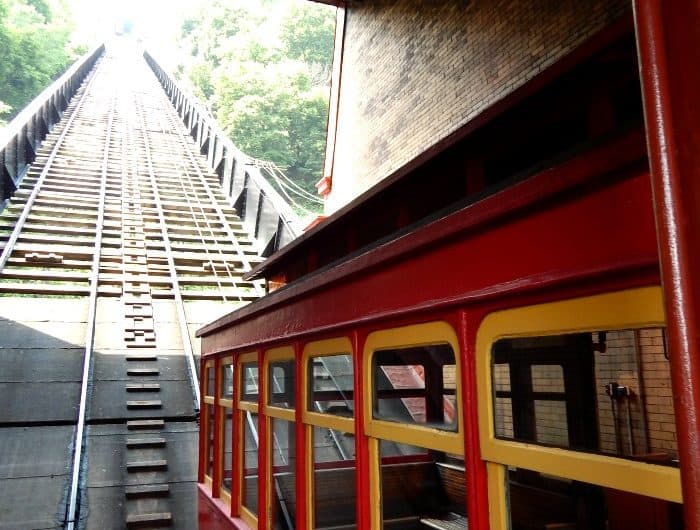
The cable cars climbing Mount Washington, paired with the sweeping view of the Golden Triangle, represent the classic image of Pittsburgh. For visitors exploring the city’s origins, tracing historic transit options and landmark overlooks offers an ideal starting point.
What You Will Learn in This Historic Pittsburgh Guide
- Insider Incline Navigation: Having ridden both inclines more times than I can count with family and out-of-town guests, I’ll walk you through the real-world payment quirks (cash vs. card), station logistics, and how to score the absolute best front-window views.
- The Ultimate Viewpoint Map: My tested walking route along Grandview Avenue, including exact spots like Point of View Park to capture clear skyline photos away from the main tourist crowds.
- Historical Confluence Deep-Dive: The backstory of Point State Park and Fort Pitt, connecting 18th-century frontier history directly to 19th-century industrial architecture.
The Historic Pittsburgh Inclines: Scaling Coal Hill
Stepping into one of these wooden cars feels like taking a trip back to the 19th century, when dozens of funiculars moved thousands of steelworkers up and down Coal Hill every day. Today, two restored inclines operate daily along the hillside:
- The Duquesne Incline: Recognizable by its red wooden cars, this incline opened in 1877. The upper station doubles as a mini-museum featuring historic photographs and original wooden hoisting machinery.
Sand and Snow Tip: To secure a direct, unobstructed view from inside the funicular car, try to board first and claim a spot right at the front window facing down the slope. If you end up at the back during peak hours, your view will mostly be the heads of fellow passengers.
- The Monongahela Incline: Commonly called “The Mon Incline,” its yellow cars operate near Station Square.
Sand and Snow Tip: Keep exact cash on hand before arriving at the Duquesne Incline lower station. While change machines are located inside the lobby, the ticket booths are strictly cash-only and do not accept credit cards or mobile pay.
Historic Pittsburgh: Mount Washington & Grandview Avenue
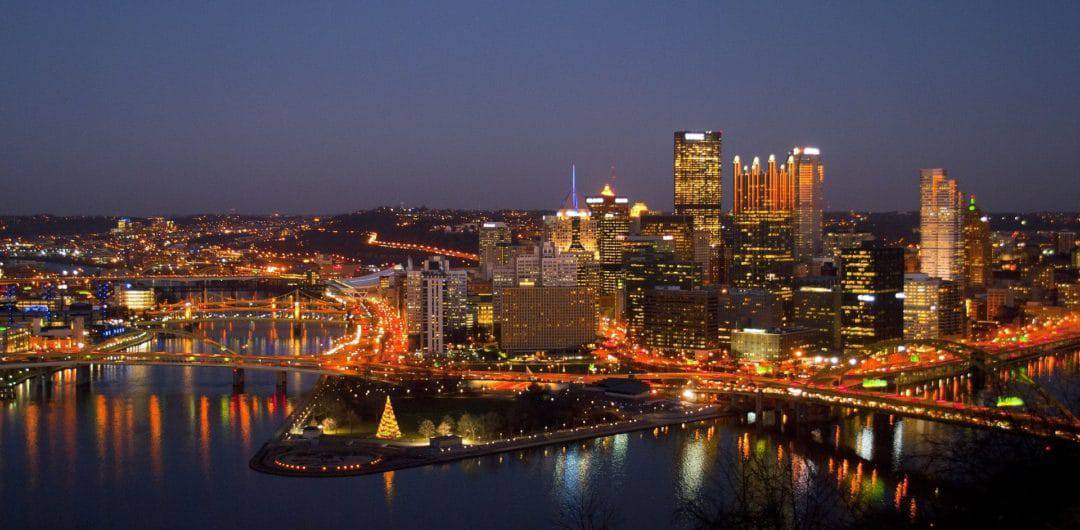
Standing 450 feet directly above the riverbanks, Mount Washington gives you that quintessential postcard view—head here right around golden hour for the best lighting across the skyline.
- Observation Decks: Viewing platforms extend over the hillside along Grandview Avenue, situated adjacent to the upper incline stations.
Sand and Snow Tip: Plan your trip up Mount Washington about 45 minutes before sunset. This gives you enough time to ride the incline, walk along Grandview Avenue, and capture the Golden Triangle as the city lights turn on during blue hour.
- Point of View Park: Located along Grandview Avenue, this park features a bronze sculpture depicting George Washington and Seneca leader Guyasuta, positioned above the meeting point of the three rivers below.
Sand and Snow Tip: Parking along Grandview Avenue can be notoriously competitive on weekends. Park in the paid lot at the base of the Duquesne Incline off Carson Street or near Station Square for the Mon Incline, then take the ride up to bypass Mount Washington neighborhood parking entirely.
Point State Park: Where the Rivers Meet

Located at the tip of Downtown’s Golden Triangle, Point State Park marks the exact confluence where the Allegheny and Monongahela rivers merge to form the Ohio River.
- The Great Fountain: Standing right at the edge of the 150-foot fountain, you can feel the cool spray blow off the confluence on a windy afternoon—it’s the absolute heart of the city.
Sand and Snow Tip: The 150-foot Great Fountain pumps thousands of gallons of water per minute, and on windy days, the overspray extends far across the paved plaza. Keep cameras and phones protected when walking up to the point’s edge.
- Fort Pitt Museum & Blockhouse: History enthusiasts explore the park grounds to view the historic Fort Pitt Blockhouse inside Point State Park.
Sand and Snow Tip: The Fort Pitt Blockhouse is free to visit, but it closes earlier than Point State Park’s grounds (typically around 5:00 PM). Visit the Blockhouse and Fort Pitt Museum first in the afternoon before heading across the river to catch the evening incline views.
FAQ: Top 5 Questions First-Time Travelers Ask about Historic Pittsburgh
Here are the top five questions heritage travelers ask when researching historic Pittsburgh:
1. How much does it cost to ride the Pittsburgh inclines, and can I pay with a credit card?
Pittsburgh inclines single-ride fares for adults are $2.50 to $2.75 each way. The Monongahela Incline accepts credit cards, PRT ConnectCards, and mobile transit passes. However, the Duquesne Incline is cash-only at the ticket booth (exact change preferred, though change machines are available inside the station).
2. Which historic Pittsburgh incline offers the better view: Duquesne or Monongahela?
If you only have time for one, pick the Duquesne Incline. Its upper station looks directly onto the point where the Allegheny and Monongahela rivers meet at Point State Park, and it features an on-site museum displaying historic wooden gears and vintage photos. The Monongahela Incline drops travelers closer to the Station Square shopping and dining area.
3. What is the oldest structure in Pittsburgh, and where is it located?
The oldest standing structure in Western Pennsylvania is the Fort Pitt Blockhouse, constructed in 1764. It is located inside Point State Park at the edge of Downtown Pittsburgh, right near the Fort Pitt Museum.
4. How long should I plan to spend at Point State Park and Mount Washington?
A combined tour takes roughly two to three hours. Allow one hour to explore Point State Park, the fountain, and the Fort Pitt Blockhouse, 30 minutes for incline rides up and down, and 45 to 60 minutes to stroll Grandview Avenue and view the city skyline.
5. Why are there inclines in Pittsburgh?
Pittsburgh’s steep topography made commuting difficult for industrial workers in the 19th century. German and Irish immigrants built funicular incline planes up “Coal Hill” (now Mount Washington) in the 1870s to transport factory laborers to and from the river valleys efficiently.
Related Reads on Sand & Snow
If you’re planning a trip to Pennsylvania or looking for more insider travel guides, check out these related posts:
- Explore a complete day in the city with the ultimate one day in Pittsburgh itinerary.
- Heading further east across the state? Read our guide on the best things to do in Cumberland Valley, PA.
- Discover more regional history and weekend trips with our scenic Pennsylvania road trip guides.
- Looking for additional destination logistics and trip planning? Browse our expert travel tips and destination guides.