
If you ever find yourself road-tripping through Southern Indiana with a craving for quirky history, gorgeous scenery, and a side of light cardio, there’s a spot just north of the Ohio River that you absolutely have to add to your bucket list. Tucked neatly inside Charlestown State Park sits the eerie, beautiful ruins of Rose Island Amusement Park.

Whether you are looking to plan a quick day trip from Louisville or want to dive deep into the fascinating regional history of an abandoned 1920s theme park, here is exactly what we are covering in this insider guide:
- The real-world trail logistics. Paved paths sound easy, but I’ll give you my personal strategy for tackling the punishing Trail 3 incline on the climb back up without losing your mind.
- The hidden ruins checklist. How to spot the foundations most casual tourists walk right past, including the old zoo cages and the ghostly high-water markers from the 1937 flood.
- A no-nonsense packing guide. What you actually need to throw in your daypack to explore this abandoned peninsula comfortably.
The Rise and Fall of the Rose Island Indiana Park

Picture 130,000 people in heavy wool suits and flapper dresses chugging down the Ohio River on a steamboat just to escape the Louisville humidity. That was the reality here in 1925.
A Louisville businessman named David Rose bought this 118-acre peninsula (technically not an island, but “Rose Peninsula” doesn’t quite have the same ring to it) where Fourteen Mile Creek meets the Ohio River. He poured a staggering $250,000 into turning it into a premier summer resort.
Families would board grand steamboats or drive their Model T automobiles across a wooden suspension bridge to join the fun. Rose Island wasn’t just a park; it was a full-blown spectacle boasting:
- The Devil’s Backbone: A thrilling wooden roller coaster named after the area’s famous rock formation.
- A live black bear named Teddy Roosevelt who anchored the on-site zoo alongside wolves and an alligator pit.
- An Olympic-sized swimming pool complete with a state-of-the-art water filtration system that was the talk of the county.
- An open-air dance hall where couples would dance the Charleston late into the night.
It was a vibrant, bustling oasis of pure joy. Then came January 1937.
The Great Ohio River Flood devastated the entire region, submerging Rose Island under more than 10 feet of churning, muddy water. The damage was catastrophic.
Instead of rebuilding, the owners simply walked away, leaving the park to be slowly swallowed by the Indiana woods for nearly 80 years.
Sand and Snow Tip: If you want to grasp the scale of the disaster before you hike, look up vintage photos of the 1937 flood online. Seeing the entire valley completely submerged puts those 20-foot trail markers into a mind-boggling perspective.
Exploring the Rose Island Trail at Charlestown State Park
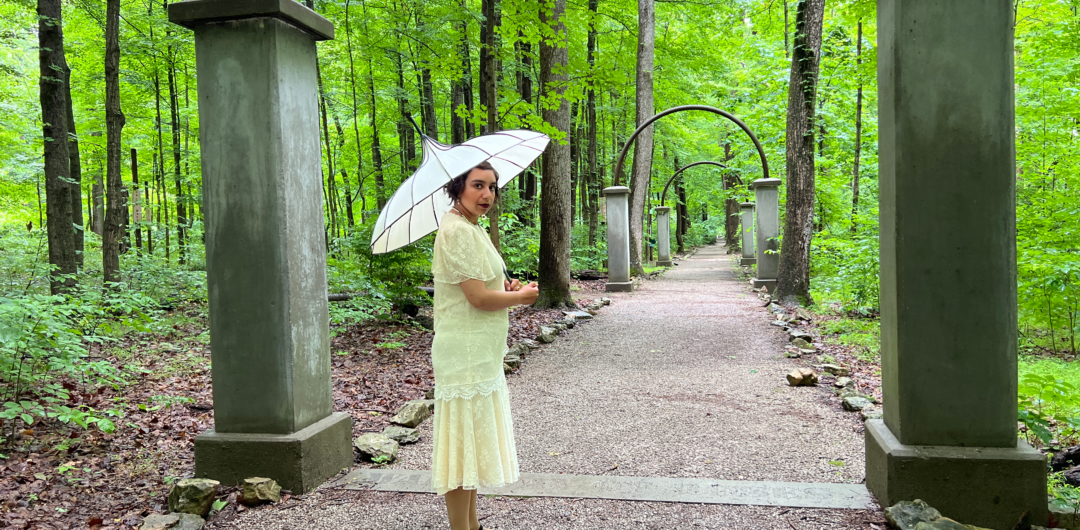
When Charlestown State Park opened the site to the public, they did something truly incredible: they preserved the ruins without over-commercializing them.
There are no cheesy gift shops or costumed actors here—just an atmospheric walk through history.
As you step onto the historic iron Portersville Bridge over Fourteen Mile Creek, your boots hit the wooden planks with a hollow, echoing thump-thump. It feels like a physical threshold.
The modern world quickly fades out, replaced by the dense, humid canopy of the Indiana woods and the slow ripple of the water below as you officially step onto the Rose Island Loop.
Sand and Snow Tip: For the ultimate cover photo or Instagram shot, don’t snap your picture from the middle of the bridge. Instead, walk all the way across to the Rose Island side, step slightly off the gravel trail, and shoot backward to frame the historic iron arches against the dense green forest canopy.
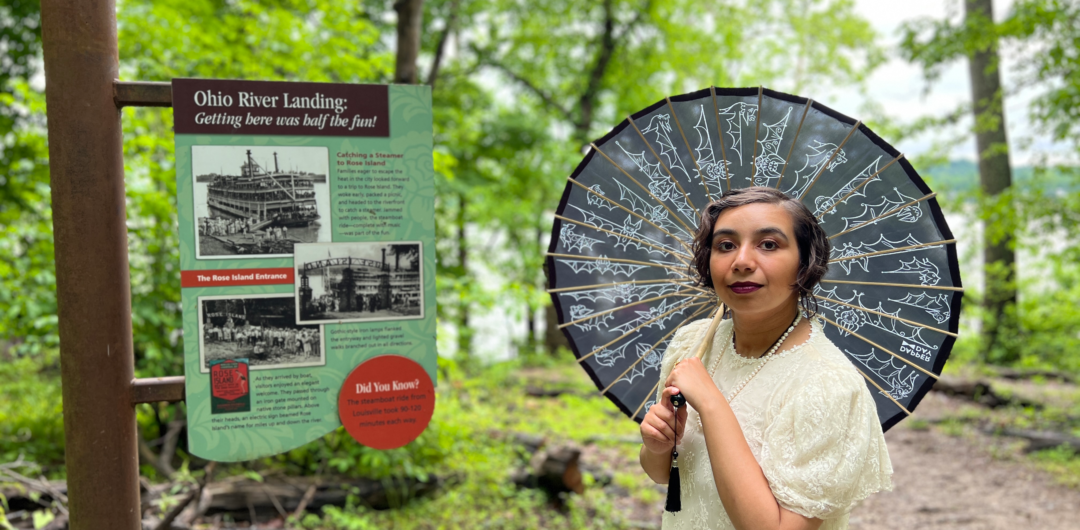
The hike transitions into an easy, flat gravel path where the park has installed fantastic interpretive panels with vintage photographs, showing you exactly what used to stand where you’re walking.
Hidden Ruins to Find Along the Loop
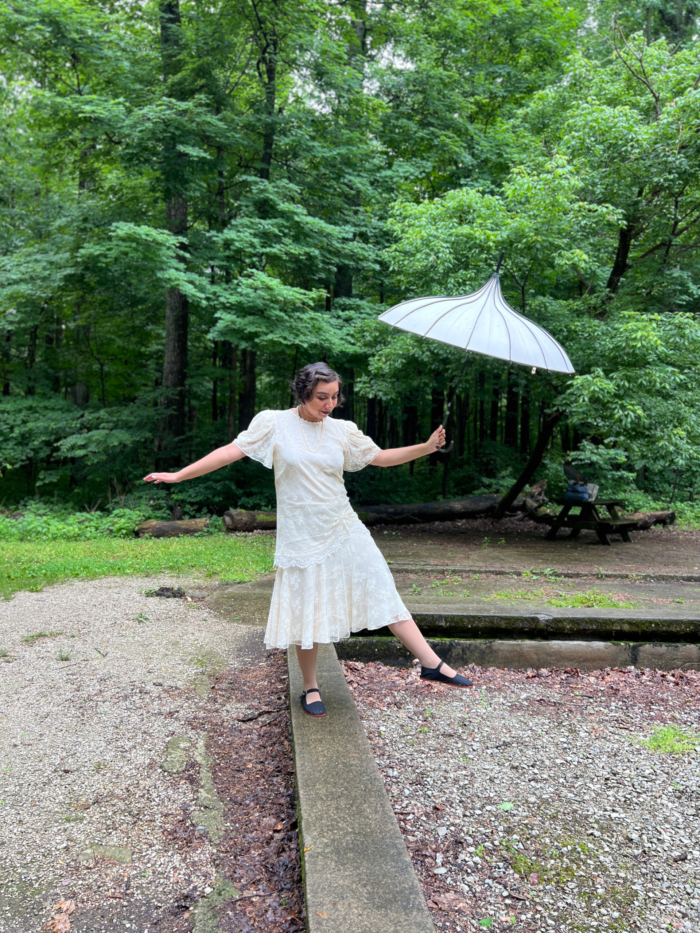
As you explore the loop, keep your eyes peeled for a few key structures:
- The Stone Pillars: This was the original entrance gate that once welcomed steamboat passengers straight off the river.
- The Swimming Pool: It’s filled in with gravel now for safety, but the original concrete perimeter and metal ladder handrails are still perfectly intact.
Sand and Snow Tip: While the main pool is filled with gravel for safety, the concrete edges can get incredibly slick when it rains, and the old metal handrails are rough. Keep a close eye on little explorers who might want to climb the ladders for a photo op.
- The Zoo Enclosures: Look for the stone foundations and circular ruins where the animals were kept.
Running your hand along the rough, moss-covered limestone of the circular zoo cages is a surreal moment. It’s incredibly quiet down there now—just the occasional chirp of a cardinal or the wind passing through the buckeye trees.
But if you close your eyes for a second, it’s not hard to imagine the chaotic cacophony of jazz music drifting from the nearby dance hall mixed with the chatter of 1920s crowds feeding peanuts to Teddy Roosevelt the bear.
Witnessing the 1937 Flood High-Water Marks
- The Ghostly Blue Rings: Look up at the trees and poles around the trail. The park painted bright blue rings up to 20 feet high to show visitors exactly where the peak water line sat during the 1937 flood. Standing beneath them gives you a humbling sense of the sheer power of Mother Nature.
Insider Tips for Your Trip
- Let’s talk about that Trail 3 switchback. Walking down to the bridge is a breeze, but the hike back up to your car at the end of the day is a relentless, 200-foot vertical grind that will have your lungs burning and your thighs screaming. There is no shame in stopping at the halfway bench to catch your breath—I certainly do.
- Pro-Tip: Pack a cold bottle of water specifically to leave in your car cup holder as a reward for surviving the climb.
- There are zero restrooms or water fountains once you head down. Seriously, fill up a massive water bottle at the park entrance or you’ll regret it by mile two. Bring a few snacks to enjoy at the picnic areas, too.
- Southern Indiana humidity is no joke. If you come in July, hit the trail by 8:00 AM. Otherwise, do yourself a favor and wait for a crisp October visit. The changing fall foliage against the old concrete ruins is absolutely magical.
Sand and Snow Tip: Indiana State Parks do offer free re-entry as long as you have your gate receipt. Keep that slip of paper safely tucked into your glove box or wallet, just in case you decide to leave the park for lunch in downtown Charlestown and come back later for a sunset hike.
Read More: Planning a larger autumn trek through the region? Check out my ultimate guide to 14 Awesome Things to do in Southern Indiana in Fall to build your perfect seasonal hit list.
Whether you’re a history buff, an urban exploration enthusiast, or just a family looking for a unique weekend hike, Rose Island is an unforgettable look at a forgotten chapter of Midwestern fun.
Read More: Take a food-centric detour through neighboring counties with my feature on Eating My Way Around Northern Indiana Part 3: Hendricks and Hamilton Counties.
Rose Island Fast Facts: Frequently Asked Questions

How do you get to Rose Island?
- Location: You can access Rose Island exclusively through Charlestown State Park in Charlestown, Indiana.
- The Route: Park at the Trail 3 lot and follow the paved trail down the hill to the historic iron Portersville Bridge. Crossing this bridge takes you directly onto Trail 7 (the Rose Island Loop).
How long is the Rose Island trail?
- Distance: The entire trek is roughly 2.5 miles round-trip.
- Breakdown: This includes the steep descent via Trail 3, the flat 0.9-mile loop around Rose Island itself (Trail 7), and the climb back to your vehicle.
- Time: Expect to spend about 1.5 to 2 hours here to fully explore.
Is Rose Island stroller and wheelchair accessible?
- The Terrain: Yes and no. The Rose Island loop itself is flat gravel, but the paved path on Trail 3 leading down to it is extremely steep with an elevation change of over 200 feet. Pushing a standard stroller back up is a massive workout.
- Accessibility Asset: Charlestown State Park offers free rentals of an all-terrain, motorized Track Chair for guests with mobility disabilities. Call the park office at least 24 hours in advance to reserve it!
Sand and Snow Tip: If you are traveling with toddlers who are too big for a carrier but too small to conquer a 200-foot vertical hill on the way back, plan for frequent ‘stop-and-look’ breaks. Treat the halfway bench on Trail 3 as a mandatory resting point to prevent a full-blown uphill meltdown.
Are dogs allowed on the Rose Island trail?
- Rules: Absolutely! Your furry road-trip companions are welcome on all trails inside Charlestown State Park, including Rose Island. Just keep them on a leash (maximum 6 feet) at all times and pick up whatever they leave behind.
What time does Rose Island open and close?
- Hours: Open daily from 7:00 AM to 11:00 PM.
- Gate Fees: Standard entry fees apply ($7 for in-state vehicles, $15 for out-of-state).
Read More: Want an atypical, water-focused place to unwind after your hike? See what it’s like to Sleep on the Water: An Unforgettable Escape in a Patoka Lake Floating Cabins.